
Every major game launch spawns the same headline. A number appears — always suspiciously round — and the phrase "lost productivity" gets attached to it. For GTA 6's November 19 release, that number is $1 billion, tied to estimates that roughly 1.5 million American workers plan to call in sick. The figure has already cycled through the New York Post, Fox affiliates, and gaming outlets as though it were settled economic fact.
It isn't. Here's what that number actually is, where it comes from, and why labor economists treat it with considerable skepticism.
Where Does the $1 Billion Figure Come From?
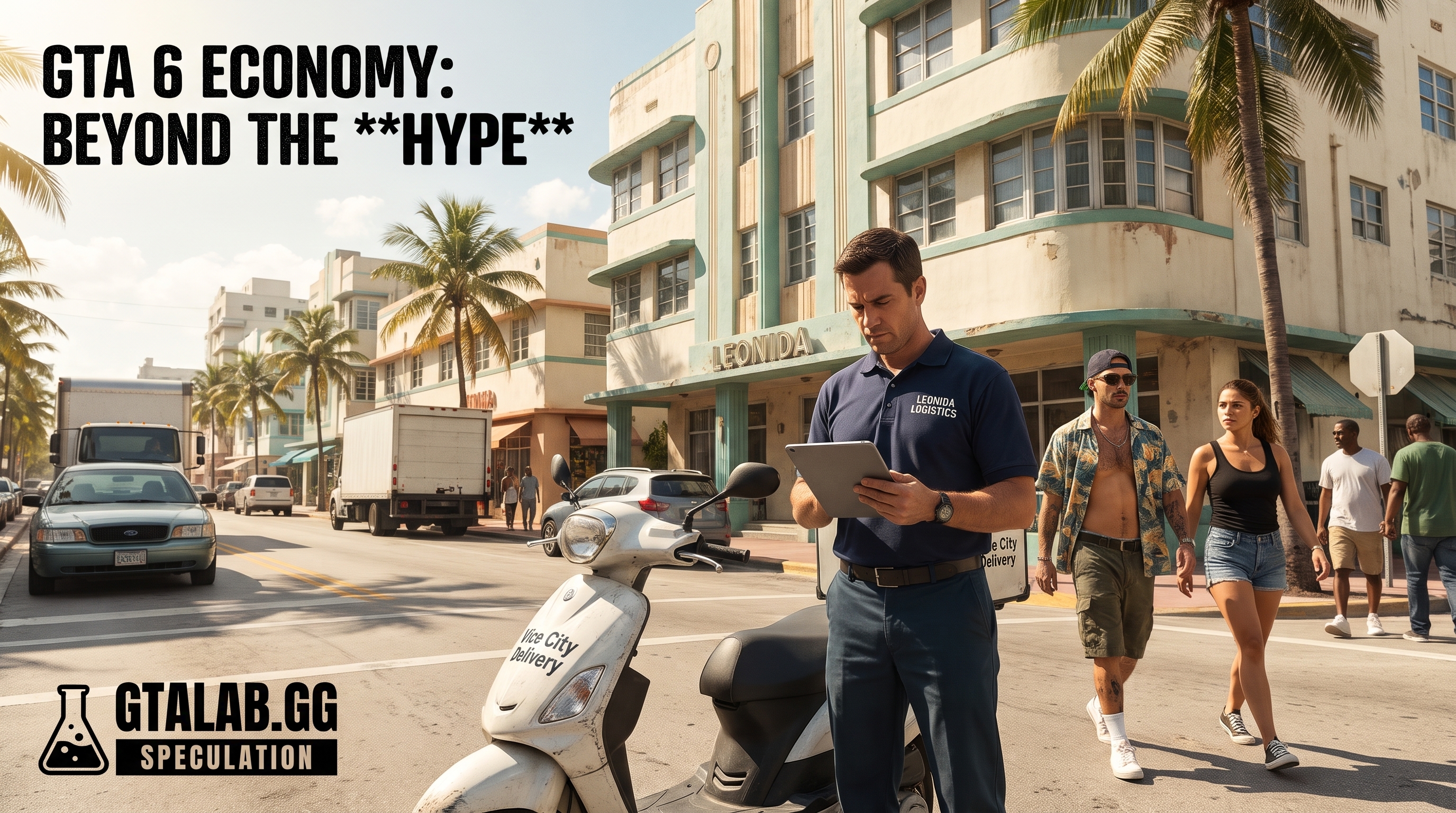
The math is simple — almost too simple. Take an estimated 1.5 million absent workers, multiply by average daily wage, and you get a figure in the neighborhood of $1 billion. The estimate circulating ahead of GTA 6's launch is attributed to projections from analysts, with economist José García-Montalvo cited in some reports as flagging the technology sector as facing the "largest single-day short-term hit."
That methodology should raise immediate flags. There is no confirmed survey of 1.5 million workers. The number is an estimate — derived by projecting from smaller polls or prior game-launch patterns onto the broader U.S. workforce. The $1 billion output is then calculated using aggregate wage data, not actual tracked absences.
In other words: it's a back-of-the-envelope projection dressed up as a forecast.
The "Productivity Loss" Myth Has a Long History
This is not a new genre of claim. The same template has been applied to the Super Bowl, March Madness, the World Cup, and the original GTA 5 launch in 2013. Each time, a consulting firm or think-tank-adjacent analyst produces a billion-dollar loss figure. Each time, economists push back.
The core problem is a concept called the lump-of-labor fallacy applied in reverse. The productivity-loss model assumes that every hour a worker is absent is an hour of output permanently destroyed. That is rarely true. Consider what actually happens:
- Work shifts. Deadlines get hit the day before or the day after. Email gets answered at midnight. Output is displaced in time, not deleted.
- Substitution occurs. Colleagues cover, managers redistribute tasks, and companies with 1.5 million absent employees would already have contingency staffing.
- Voluntary absence is not random. Workers who plan to take a sick day around a game launch are overwhelmingly those with sufficient paid leave or flexible roles — precisely the workers whose single-day absence has the least operational impact.
- Consumer spending offsets. The same 1.5 million workers staying home are spending money — on the game itself, on food delivery, on streaming subscriptions. That spending is economic activity. It isn't counted on the other side of the ledger in these estimates.
What Do Labor Economists Actually Say?
Mainstream labor economics is blunt on this point: voluntary single-day absences tied to a predictable cultural event do not constitute measurable GDP loss. The economy does not have an on/off switch that corresponds to individual attendance records.
Economists who study absenteeism distinguish between presenteeism (being at work but performing poorly), unplanned absenteeism (illness, emergencies), and planned discretionary absence. GTA 6 sick days fall firmly in the third category. Studies on Super Bowl Monday — a perennial source of similar billion-dollar claims — consistently find no statistically detectable GDP impact in the quarter it occurs. The "lost" output is almost entirely recovered within the same pay period.
The honest answer: a figure like "$1 billion in lost productivity" is a marketing number, not an economic measurement. It generates headlines. It does not appear in BLS data, GDP revisions, or any subsequent economic post-mortem.
Why Does This Claim Keep Getting Made?
Follow the incentive structure. These estimates typically originate from:
- HR software and scheduling companies — who benefit from employers panicking about absenteeism and purchasing workforce management tools.
- PR firms working adjacent to media cycles — a round billion-dollar number tied to a blockbuster release is a guaranteed pickup.
- Outlets chasing engagement — the frame ("video game destroys economy") is inherently shareable, regardless of whether the economics hold up.
None of this makes the underlying behavior — millions of people planning to skip work for GTA 6 — fictional. That part is plausible and has genuine precedent from GTA 5's 2013 launch. What's fictional is the economic damage model attached to it.
The GTA 5 Precedent: What Actually Happened?
GTA 5 launched in September 2013 and became the fastest entertainment product to gross $1 billion at that point — doing so in three days. Similar productivity-loss headlines circulated then too. The U.S. economy's September 2013 GDP figures showed no anomaly attributable to game-launch absenteeism. The Bureau of Labor Statistics reported no unusual spike in unscheduled absences for that period.
If there was economic disruption, it didn't show up in the numbers that actually measure economic disruption. That's the relevant data point, and it almost never makes the follow-up coverage.
How Big Is GTA 6's Real Economic Footprint?
Here's what the genuine economic impact of GTA 6 looks like — and it runs in the opposite direction from the productivity-loss narrative:
| Economic Factor | Direction | Notes |
|---|---|---|
| Game sales revenue | Positive | At $80–$100 per copy, even 10 million day-one sales = $800M–$1B in consumer spending |
| Retail / digital platform activity | Positive | PlayStation Store, GameStop, Amazon traffic spike |
| Food delivery, streaming, ancillary spend | Positive | Stay-at-home consumers drive adjacent sectors |
| Planned day-off productivity loss | Negligible (est.) | Largely recovered within the same pay period |
| Long-run GTA Online revenue | Strongly positive | GTA 5 Online generated billions over a decade; GTA 6 Online expected to match or exceed |
The real economic story of GTA 6 is a historic inflow of consumer spending — not a drain on output. The $1 billion productivity-loss headline is dwarfed by the revenue figure on the other side, and that revenue number is also more defensible because it's grounded in actual transactions.
The Super Bowl Comparison: A Template for Skepticism
Super Bowl Monday productivity-loss estimates have been issued every year since at least 2005. The claimed cost ranges from $1 billion to $4 billion depending on who is issuing the estimate. Academic economists reviewing these claims — including researchers at the Federal Reserve and university labor economics departments — have repeatedly found them methodologically unsound.
The pattern: estimate is issued → media amplifies → no follow-up data confirms → same estimate is issued the next year, slightly larger. GTA 6 is simply the latest entry in that cycle, with a game replacing the championship game.
Treat any headline claiming GTA 6 will "cost" the U.S. economy a specific dollar figure as suspect until it traces back to a peer-reviewed methodology — not a press release.
What Should You Actually Take Away?
Yes, millions of people will play GTA 6 on November 19. Yes, some of them will call in sick. That is real behavior with real consequences for individual employers who aren't prepared for it. If you manage a team with gaming-heavy demographics, a heads-up conversation or flexible scheduling on that date is a reasonable HR move.
But the macro narrative — that a video game will inflict measurable, lasting damage on the U.S. economy — is not supported by economic evidence from any comparable prior event. It's a headline built from a methodology that labor economists consider too crude to be useful.
The honest summary: GTA 6's economic impact on launch day is net positive for the U.S. economy, driven by consumer spending that dwarfs any plausible estimate of displaced productivity. The billion-dollar loss figure is the kind of number that sounds authoritative until you ask how it was calculated.
FAQ
Q. Will GTA 6 really cost the US economy $1 billion? Almost certainly not in any meaningful sense. The $1 billion figure is a back-of-the-envelope estimate based on projected absences multiplied by average wages. It doesn't account for work being rescheduled, consumer spending generated by the game, or the fact that planned single-day absences rarely translate into permanent output loss. No comparable game or sporting event has produced a detectable GDP impact in subsequent official data.
Q. Where does the 1.5 million absent workers estimate come from? It's a projection, not a measured figure. Analysts extrapolated from smaller polls and prior launch behavior — particularly GTA 5's 2013 release — and scaled up to the broader U.S. workforce. The number is plausible as a rough order of magnitude, but it carries wide uncertainty and has not been confirmed by any employer survey or BLS data.
Q. Didn't the same thing happen with GTA 5? Yes, and the post-launch economic data showed no anomaly. GTA 5 launched in September 2013, generated $1 billion in sales within three days, and U.S. GDP figures for that period reflected no unusual productivity drag. The productivity-loss headlines from 2013 were not validated by subsequent economic reporting.
Q. Is the GTA 6 productivity loss claim similar to Super Bowl Monday claims? Structurally identical. Super Bowl Monday productivity-loss estimates have been issued annually for over two decades, ranging from $1B to $4B. Academic economists have repeatedly found these estimates methodologically unsound. GTA 6 fits the same pattern: a culturally salient event, a round number, and minimal follow-up scrutiny of the underlying math.
Q. What is GTA 6's actual economic impact likely to be? Net positive. Day-one sales revenue alone — at $80–$100 per copy across tens of millions of units — represents a significant inflow of consumer spending. Ancillary spending on food delivery, hardware accessories, and streaming further adds to that total. Any productivity displacement from planned absences is expected to be recovered within the same week and will not appear as a measurable drag in quarterly GDP data.