
A giant GTA 6 Paris banner went up on a skyscraper in the French capital — and anyone who looked closely noticed something missing. Every gun in Rockstar's official cover art had been scrubbed clean. No pistols, no rifles, no weapons of any kind. The characters are still there. The neon energy is still there. The firearms are not.
This isn't a leak or a rumor. The altered artwork is confirmed — spotted in Paris and, separately, at New York's Times Square — and it tells a story about how Rockstar is navigating a patchwork of national advertising laws ahead of GTA 6's November 19, 2026 launch.
What Actually Happened to the Paris Banner?
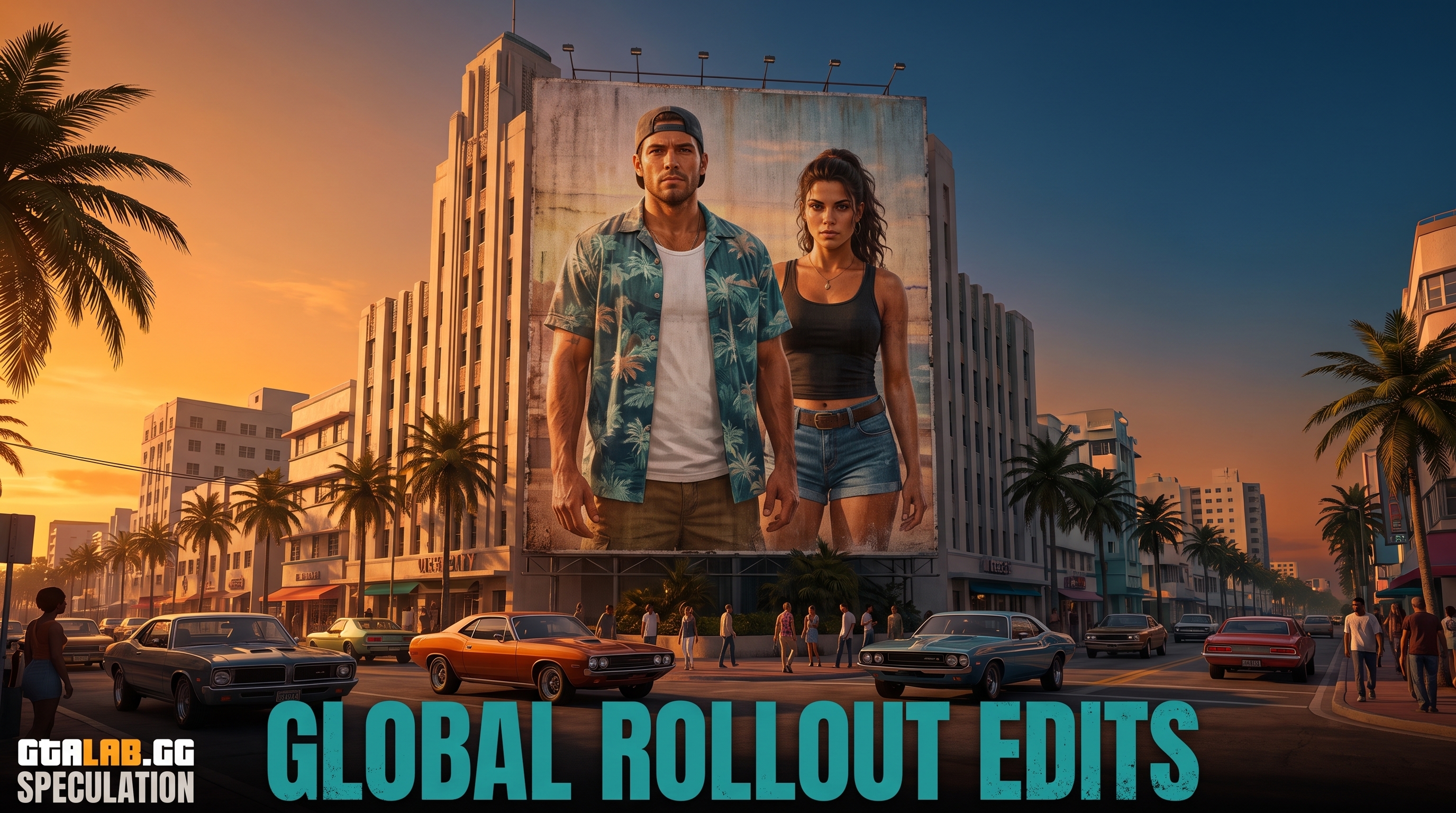
Rockstar's standard GTA 6 promotional artwork features characters holding or displaying firearms — consistent with the franchise's identity since 1997. When that artwork went up in Paris, the guns were gone. Not cropped out of frame. Not obscured by text. Digitally removed, leaving characters in poses that now look slightly awkward without the objects they were clearly designed to hold.
France maintains strict regulations on the public display of firearms imagery in outdoor advertising. The logic is straightforward: a billboard visible to every pedestrian, including minors, is treated very differently from a game box on a retail shelf behind an age-rating sticker. French law draws that line firmly, and Rockstar — or its local marketing partners — drew a version of the artwork that stays on the right side of it.
The result is, depending on your perspective, either responsible localization or unintentionally comic design. Creative industry observers noted that the censored poses read as strange. Characters reaching for nothing. Hands gripping air. That's the honest aesthetic cost of compliance.
Is This Only a Paris Problem?
No. The Times Square sighting is the important data point here. New York City doesn't have a blanket ban on firearms imagery in outdoor advertising, but individual property owners, transit authorities, and municipal contracts can impose their own standards. The MTA, for example, has a documented history of rejecting ads it deems too violent or controversial for subway platforms. Rockstar appears to have adopted a single cleaned-up asset for high-visibility outdoor placements rather than managing two separate creative tracks.
That decision makes operational sense. Running one globally sanitized version of the outdoor artwork is cheaper and faster than auditing every local jurisdiction. The tradeoff is that markets with no legal requirement for the change still get the censored version by default.
Which European Markets Are Most Likely to See Similar Restrictions?
France is not an outlier in Europe. Several major markets have advertising standards bodies or statutory rules that could produce similar outcomes:
| Country | Relevant Body / Rule | Firearms in Outdoor Ads | Status |
|---|---|---|---|
| France | ARPP / municipal law | Restricted in public outdoor display | Confirmed censored |
| United Kingdom | ASA (Advertising Standards Authority) | Context-dependent; violent imagery flagged | Risk (est.) |
| Germany | Werberat / JuSchG | Youth protection rules apply to public display | Risk (est.) |
| Netherlands | SRC | Violence codes apply; case-by-case | Low–Medium risk (est.) |
| Spain | Autocontrol | Self-regulatory; less restrictive outdoors | Low risk (est.) |
Risk ratings above are editorial estimates based on each country's advertising standards framework, not confirmed Rockstar decisions.
The UK is worth watching. The ASA has upheld complaints against video game advertising featuring violent imagery on public transport and near schools. A GTA 6 banner in a London tube station or on a bus shelter would face real scrutiny. Rockstar almost certainly knows this — which is another reason to maintain a single "clean" outdoor asset.
Does This Affect the Game Itself?
Here's the part that actually matters to players: no. Advertising censorship and content censorship are entirely separate tracks. What appears on a billboard in Paris has zero bearing on what ships on the disc or in the download.
The game's content is governed by age-rating bodies — PEGI in Europe, ESRB in North America, ACB in Australia. GTA 6 has already received a PEGI 18 rating across European territories. That rating permits the full, unedited game to be sold to adults. A French retailer can legally put the PEGI 18 box on a shelf. They cannot legally plaster the firearms-featuring key art across a public bus shelter.
Those are different systems, different rules, different outcomes. The game you play will not have guns removed from it because a Paris billboard did.
Why Does Rockstar Bother With Giant Outdoor Banners at All?
Because they work — especially for a title of this scale. GTA 6 is targeting an audience that extends well beyond the core gaming demographic. Outdoor advertising in major cities reaches people who don't follow gaming news, don't watch Rockstar trailers on YouTube, and won't see a social media campaign. A skyscraper banner in Paris or a Times Square wrap gets photographed, shared, and discussed by people who weren't already paying attention.
The GTA 6 marketing ban conversation — specifically, whether the game faces bans or restrictions in certain markets — has been circulating since the franchise's history with Australia's classification system resurfaced online. It's worth being direct: GTA 6 is not banned in France. The banner complied with local law. The game has a valid PEGI 18 rating and will be sold normally across the EU.
What the Censored Artwork Actually Reveals About Rockstar's Strategy
Rockstar is treating this launch as a mass-market cultural event, not just a games industry release. That ambition requires playing by the rules of mainstream advertising infrastructure — outdoor media networks, transit systems, municipal permits — that were not designed with M-rated game marketing in mind.
The gun-removal decision reads less like moral capitulation and more like pragmatic logistics. You want the biggest outdoor placement in Paris? You fill out the paperwork, you submit the artwork, and you comply with the conditions. Arguing with French advertising law to preserve firearms on a skyscraper banner is not a fight worth having six weeks before launch.
What it does signal is that Rockstar's GTA 6 Europe rollout is being managed market-by-market with genuine attention to local compliance — which is, frankly, more sophisticated than the studio's earlier reputation for "release globally and deal with the fallout" might suggest.
Expect more localized variations as the campaign intensifies heading toward November. The Paris banner is almost certainly not the last example of this.
FAQ
Q. Why were guns removed from the GTA 6 Paris banner? French regulations restrict the public display of firearms imagery in outdoor advertising. Rockstar — or its local marketing partners — submitted an altered version of the cover art with all weapons digitally removed to comply with those rules and secure the outdoor placement.
Q. Does the GTA 6 Paris banner censorship affect the actual game content? No. Advertising standards and game content ratings are completely separate systems. GTA 6 holds a PEGI 18 rating across Europe, and the full game will be sold without content alterations. What appears on a billboard has no bearing on what ships in the game.
Q. Was the gun censorship only in Paris, or did it happen elsewhere? The same or similar cleaned-up artwork was also spotted at New York's Times Square, suggesting Rockstar adopted a single sanitized outdoor asset for high-visibility placements globally rather than maintaining separate regional creative tracks.
Q. Is GTA 6 banned or restricted in France or other European countries? No. GTA 6 is not banned in France or any major European market. The billboard censorship is an advertising compliance matter, not a content restriction. The game will be sold legally across the EU under its PEGI 18 classification.
Q. Which other European countries might see similar GTA 6 marketing restrictions? The UK and Germany carry the highest risk of similar outdoor advertising scrutiny based on their respective advertising standards frameworks — the ASA and Werberat — both of which apply youth protection and violence codes to public-facing media. These are editorial estimates, not confirmed Rockstar decisions.