
When South Park writes a joke about your game, you've already won. Not commercially — that comes November 19, 2026. Culturally. The Season 29 premiere took direct aim at Grand Theft Auto 6, and that single creative decision tells you more about GTA 6's place in the public consciousness than any trailer view count ever could.
This isn't a coincidence of timing. It's a signal. And it's worth understanding exactly what that signal means.
The South Park Index: How the Show Picks Its Targets
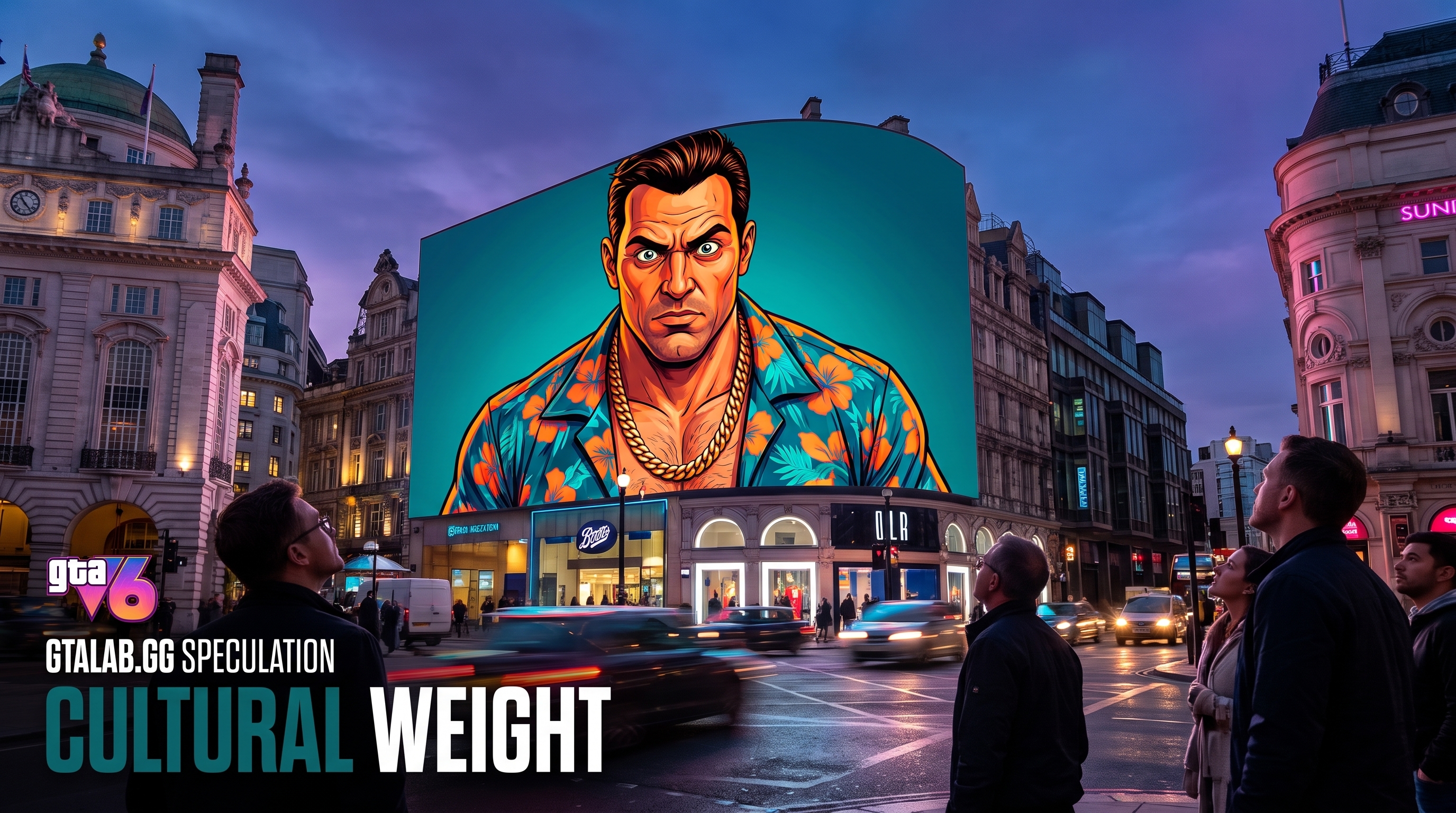
South Park has been running since 1997. In that time, Trey Parker and Matt Stone have developed an almost clinical eye for cultural saturation — the precise moment when a phenomenon stops being a niche obsession and becomes something every person in America, gamer or not, vaguely knows about. They've parodied The Lord of the Rings, Guitar Hero, World of Warcraft, Minecraft, and Pokemon Go. The pattern is consistent: they don't arrive early, and they don't arrive late. They arrive at peak.
Call it the South Park Index. If the show references something, that thing has cleared the threshold from subcultural to mainstream. It no longer needs an explanation for a general audience. It simply is.
GTA 6 clearing that threshold before it has shipped a single copy is, frankly, extraordinary.
What "Mainstream" Actually Requires
Mainstream recognition isn't about sales. GTA V sold over 205 million copies and generated more than $8 billion in revenue — numbers that dwarf most Hollywood franchises. But those are gaming-world metrics. Mainstream cultural penetration is different. It means your non-gaming aunt has heard of it. It means late-night hosts reference it without explaining what it is. It means a satirical TV show can build a cold open around it and trust that the laugh will land.
GTA V got there eventually — years after launch, largely through the lens of GTA Online's ongoing cultural life. GTA 6 appears to have gotten there before it even exists as a purchasable product. That's the anomaly worth examining.
GTA's History as Pop Culture Raw Material
The Grand Theft Auto series has always been designed for cultural consumption beyond gaming. The radio stations, the TV-within-the-game, the satirical billboards — Rockstar builds fictional worlds that are themselves critiques of media. Players don't just play GTA; they consume it as a piece of American satire.
That design philosophy has made the franchise unusually legible to non-gamers. You don't need to have played GTA IV to understand that it was mocking the immigrant experience in a hyper-violent American city. The shorthand travels. And the GTA 6 trailer — which broke YouTube records when it dropped in December 2023 — introduced Lucia and Vice City's Florida-coded chaos to an audience far wider than Rockstar's existing install base.
By the time South Park scripts a parody, their writers' room has determined that the target is universally understood. For GTA 6, that determination apparently happened before launch day. That's a first for the franchise, and possibly for any video game.
The Extended Look Accelerated Everything
In August 2026, Rockstar released what the internet immediately labeled the "Extended Look" — a longer, more detailed showcase of GTA 6's world, mechanics, and characters. The reaction was immediate and loud. IGN described the internet response as "mind-blowingly good," with fans dissecting character animation, environmental detail, and the sheer density of activities on offer.
That extended reveal did something specific: it moved GTA 6 from anticipation to conversation. People who don't follow gaming news were seeing clips, reels, and reaction videos in their feeds. The cultural footprint expanded past gaming Twitter and into general pop culture discourse. South Park's writers' room would have noticed.
The Parody Timing Problem — and Why It's Actually Perfect
Here's the counterintuitive part. Conventional wisdom says you parody something after it has fully arrived — after the cultural peak, when you can safely deflate it. South Park parodied Pokémon Go in 2016, at the height of the app's dominance. They parodied Guitar Hero in 2007, when plastic instrument games were inescapable.
Parodying GTA 6 in Season 29's opener — before the game ships in November — is slightly different. It's not deflation. It's participation. The show isn't saying "this thing got too big, let's knock it down." It's saying "this thing is the cultural event right now, and we want to be part of the conversation."
That framing matters for Rockstar, even if they had nothing to do with it. Unsolicited, unpaid cultural endorsement from one of television's most skeptical satirical voices is marketing money genuinely cannot buy.
What Rockstar Is — and Isn't — Doing With That Cultural Weight
There's an irony embedded in this moment. South Park is a show built on aggressively topical satire — it famously airs episodes within days of real-world events. GTA 6, meanwhile, is taking the opposite approach to cultural commentary.
Rockstar has publicly stated they're being careful about which cultural references make it into the game. Specifically, they've confirmed that GTA 6 will not directly parody Donald Trump or the COVID-19 pandemic — not because those topics are off-limits philosophically, but because the team believes those references could feel dated by the time players are still engaging with the game years from now. The goal, Rockstar has said, is satire that speaks to universal human folly rather than moment-specific events.
It's a disciplined, long-view approach. And it creates a fascinating inversion: South Park, the show famous for its immediate topicality, is parodying a game that is deliberately trying to transcend topicality.
Timeless vs. Timely: Two Different Satirical Models
| Approach | South Park | GTA 6 (Rockstar's stated philosophy) |
|---|---|---|
| Speed | Days after real-world events | Deliberately avoids moment-specific references |
| Targets | Trump, COVID, crypto, TikTok | Universal human greed, vanity, institutional failure |
| Shelf life | Episode-length; culturally datable | Designed to feel relevant in 2031, not just 2026 |
| Risk | Aging poorly if trend dies | Missing the "now" entirely if too abstract |
The fact that South Park found enough raw material in GTA 6's premise — Florida, crime, chaos, Lucia — to write a parody without the game being timely about Trump or COVID suggests Rockstar's instincts are correct. The game's concept is culturally legible on its own terms.
What "The Game TV Wrote Jokes About Before It Launched" Actually Means
Let's be direct about the stakes here. Video games have struggled for decades to be taken seriously as cultural objects by mainstream media — not just by critics, but by the broader institutions that decide what counts as a cultural event. The Oscars don't have a Best Game category. The New York Times still occasionally treats gaming as a niche beat.
South Park parodying GTA 6 pre-launch doesn't solve any of those structural issues. But it does something smaller and more concrete: it marks the game as a legitimate subject of popular satire, in the same category as blockbuster films, political figures, and social media trends that the show has always treated as fair game.
That's new ground for a game that hasn't shipped yet. And it raises the question of what happens to that cultural footprint once GTA 6 actually arrives in November.
The Risk of Peak Too Early
One legitimate concern is the pre-launch hype ceiling. Cultural moments have a metabolism. If the conversation has already crested — if South Park has already written the parody, if the extended look has already generated the "mind-blowing" headlines — what does the actual launch add?
The honest answer: a lot, probably. GTA V's cultural life didn't begin at launch; it expanded and mutated over 13 years. The expectation is that GTA 6 follows a similar pattern, with the parody and pre-launch discourse becoming footnotes in a much longer story. But the risk of diminishing returns is real, and Rockstar's marketing team will need to manage expectations carefully between now and November 19.
The Bigger Picture: GTA 6 as a Generational Marker
Every generation has a piece of pop culture that functions as a shared reference point — something that people who don't share much else can agree on. For a while, Game of Thrones was that thing. Avengers: Endgame was briefly that thing. The evidence accumulating around GTA 6 — the record-breaking trailer, the extended look reaction, the South Park parody, the reported military recruitment angles (est.) from earlier this year — suggests the game is being positioned, consciously or not, as that kind of generational marker.
The South Park Index says it's already there. The question now is whether the game itself, when it finally ships November 19, 2026, lives up to the cultural weight that's been assigned to it in absentia.
That's not a question anyone can answer yet. But it's the right question to be asking.
FAQ
Q. What did South Park do with GTA 6? South Park's Season 29 premiere featured a direct parody of GTA 6, making it one of the rare cases where a major TV satire targeted a video game before the game had even launched commercially.
Q. Why does a South Park parody matter for GTA 6's cultural impact? South Park consistently targets phenomena at the moment of peak mainstream saturation — not niche popularity, but genuine cross-demographic recognition. A parody in Season 29 functions as an unofficial signal that GTA 6 has cleared that threshold before its November 2026 release.
Q. Will GTA 6 itself parody real events like Trump or COVID? No. Rockstar has publicly stated they're avoiding direct references to Trump and the COVID pandemic, citing the risk of those references feeling dated years after launch. The studio's stated goal is satire aimed at universal human behavior rather than specific recent events.
Q. Has South Park parodied video games before? Yes — past targets include World of Warcraft, Guitar Hero, Minecraft, and Pokémon Go, typically at the height of each game's cultural moment. GTA 6 joins that list before it has even shipped.
Q. When does GTA 6 actually release? GTA 6 is confirmed for release on November 19, 2026, for PlayStation 5 and Xbox Series X|S. A PC version has not been announced.